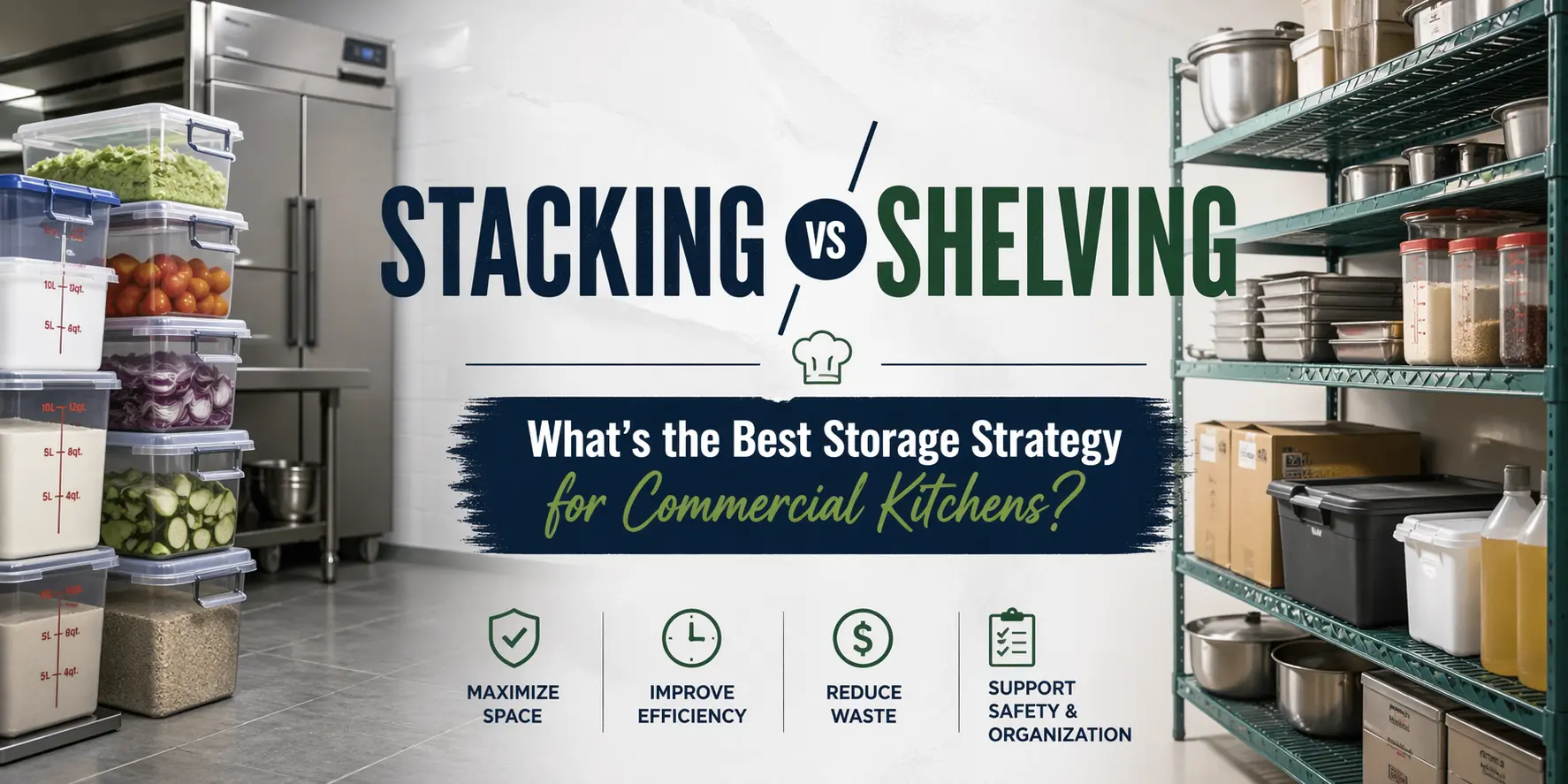
Efficient commercial kitchen storage is one of the most important—and often overlooked—factors in running a successful foodservice operation. From maximizing limited space to ensuring compliance with food storage safety standards, how you store ingredients and supplies directly impacts workflow, food quality, and even profitability.
One of the most common questions operators face is: stacking vs shelving — which storage strategy works best? The answer isn’t always straightforward. Both approaches have their place, but understanding when and how to use each is key to building an effective kitchen storage organization system.
In this guide, we’ll break down the pros and cons of stacking and shelving, explore best practices for restaurant storage solutions, and help you design a smarter, safer back-of-house setup.
Why Storage Strategy Matters in Restaurants
Before comparing stacking and shelving, it’s important to understand why storage is such a critical part of kitchen operations.
Proper food storage in restaurants helps you:
- Reduce food waste
- Improve workflow efficiency
- Prevent cross-contamination
- Maintain compliance with restaurant storage regulations
- Maximize limited kitchen space
A poorly designed kitchen storage layout leads to clutter, wasted movement, and higher operational costs.
What Is Stacking in Commercial Kitchens?
Stacking refers to placing items directly on top of each other, typically in containers or boxes. This method is commonly used for:
- Bulk ingredients
- Sealed dry goods
- Packaged supplies
- Food storage containers with lids
Advantages of Stacking
- Saves horizontal space
- Simple and quick to implement
- Works well for uniform items
- Useful in tight storage areas
Disadvantages of Stacking
- Limited visibility of items
- Increased risk of damage or contamination
- Difficult to access bottom items
- Can violate proper food storage practices if done incorrectly
Stacking can be effective—but only when used carefully and with the right restaurant supplies, such as durable, stackable containers.
What Is Shelving in Commercial Kitchens?
Shelving involves organizing items on racks or shelves, such as:
- Wire shelving for restaurants
- Stainless steel shelving
- Wall mounted shelves commercial kitchen setups use
- Freestanding storage racks commercial kitchen environments rely on
This method is widely considered the standard for professional kitchens.
Advantages of Restaurant Shelving
Using proper restaurant shelving offers several key benefits:
1. Improved Organization
Shelving allows for clear separation of products, making it easier to organize restaurant kitchen storage efficiently.
2. Better Airflow
Open shelving systems improve ventilation, which is essential for maintaining safe food storage in restaurants.
3. Easier Access
Items are easier to reach, reducing wasted time during service.
4. Compliance with Regulations
Many health codes require food to be stored off the floor and properly spaced—making shelving essential for meeting NSF shelving requirements.
Disadvantages of Shelving
While shelving is highly effective, it’s not without drawbacks:
- Takes up more vertical space
- Higher upfront investment
- Requires planning and installation
- Can become cluttered without proper organization
However, these challenges are usually outweighed by the long-term efficiency gains.
| Feature | Stacking | Shelving |
|---|---|---|
| Space Efficiency | High (horizontal) | High (vertical) |
| Accessibility | Low | High |
| Organization | Limited | Excellent |
| Food Safety | Riskier | Safer |
| Compliance | May be limited | Strong compliance |
| Best For | Bulk storage | Daily operations |
When to Use Stacking
Stacking works best in specific situations where space is limited or items are uniform.
Ideal Uses:
- Sealed dry goods in containers
- Bulk storage in back rooms
- Overflow inventory
- Non-perishable items
To use stacking safely:
- Always use food storage containers with lids
- Avoid stacking raw food above ready-to-eat items
- Follow prevent cross contamination storage guidelines
When to Use Shelving
Shelving should be your primary storage method in most kitchens.
Ideal Uses:
- Refrigerated and perishable foods
- Prep ingredients
- Frequently accessed items
- Cleaning and commercial kitchen supplies
Using kitchen shelving units ensures better control over inventory and improves daily operations.
Best Shelving Options for Restaurants
Not all shelving is the same. Choosing the right system is essential.
1. Wire Shelving
- Lightweight and durable
- Excellent airflow
- Ideal for dry and refrigerated storage
2. Stainless Steel Shelving
- Strong and easy to clean
- Best for high-moisture areas
3. Wall-Mounted Shelves
- Great for maximizing vertical space
- Keeps floors clear
4. Mobile Shelving Units
- Flexible and easy to reposition
- Ideal for dynamic kitchen environments
Choosing the best shelving for restaurant kitchen setups depends on your space, volume, and workflow.
Food Storage Safety: What You Must Know
Whether you’re stacking or shelving, food storage safety should always be the priority.
Key rules include:
- Store food at least 6 inches off the ground
- Keep raw and cooked foods separate
- Use clearly labeled containers
- Follow FIFO (First In, First Out) rotation
- Maintain proper temperature zones
Failing to follow these restaurant storage regulations can result in health violations and food safety risks.
How to Organize Storage in a Commercial Kitchen
To build an efficient system, combine both strategies strategically.
Step 1: Create Storage Zones
Separate areas for:
- Dry storage
- Refrigeration
- Freezer
- Cleaning supplies
Step 2: Use Shelving for Active Inventory
Keep frequently used items on accessible restaurant shelving.
Step 3: Use Stacking for Backup Inventory
Store overflow items using stackable containers.
Step 4: Label Everything
Clear labeling improves inventory control and reduces waste.
Maximizing Storage Space in Small Kitchens
For smaller operations, smart design is critical.
Tips:
- Use vertical space with shelving
- Install wall-mounted units
- Choose stackable containers
- Keep aisles clear
- Use multi-purpose storage racks
These kitchen storage solutions for small restaurants help maximize every square foot.
Common Storage Mistakes to Avoid
Even experienced operators make these errors:
- Over-stacking items unsafely
- Ignoring airflow in refrigeration
- Mixing raw and ready-to-eat foods
- Using mismatched containers
- Not utilizing vertical space
Avoiding these mistakes improves both efficiency and compliance.
Building the Right Storage System
The most effective kitchens don’t choose stacking or shelving—they use both.
The Best Approach:
- Shelving for daily operations
- Stacking for bulk and backup storage
- Proper containers for protection
- Clear organization for efficiency
Combining these elements creates a flexible, scalable system.
Final Thoughts
When it comes to stacking vs shelving, there’s no one-size-fits-all answer. However, for most restaurants, shelving should be the foundation of your commercial kitchen storage system, while stacking serves as a supplemental solution.
By investing in the right restaurant shelving, using high-quality food storage containers, and following proper food storage practices, you can create a kitchen that is safer, more efficient, and easier to manage.
Ultimately, the goal is simple:
maximize space, protect food, and support your team with a system that works.