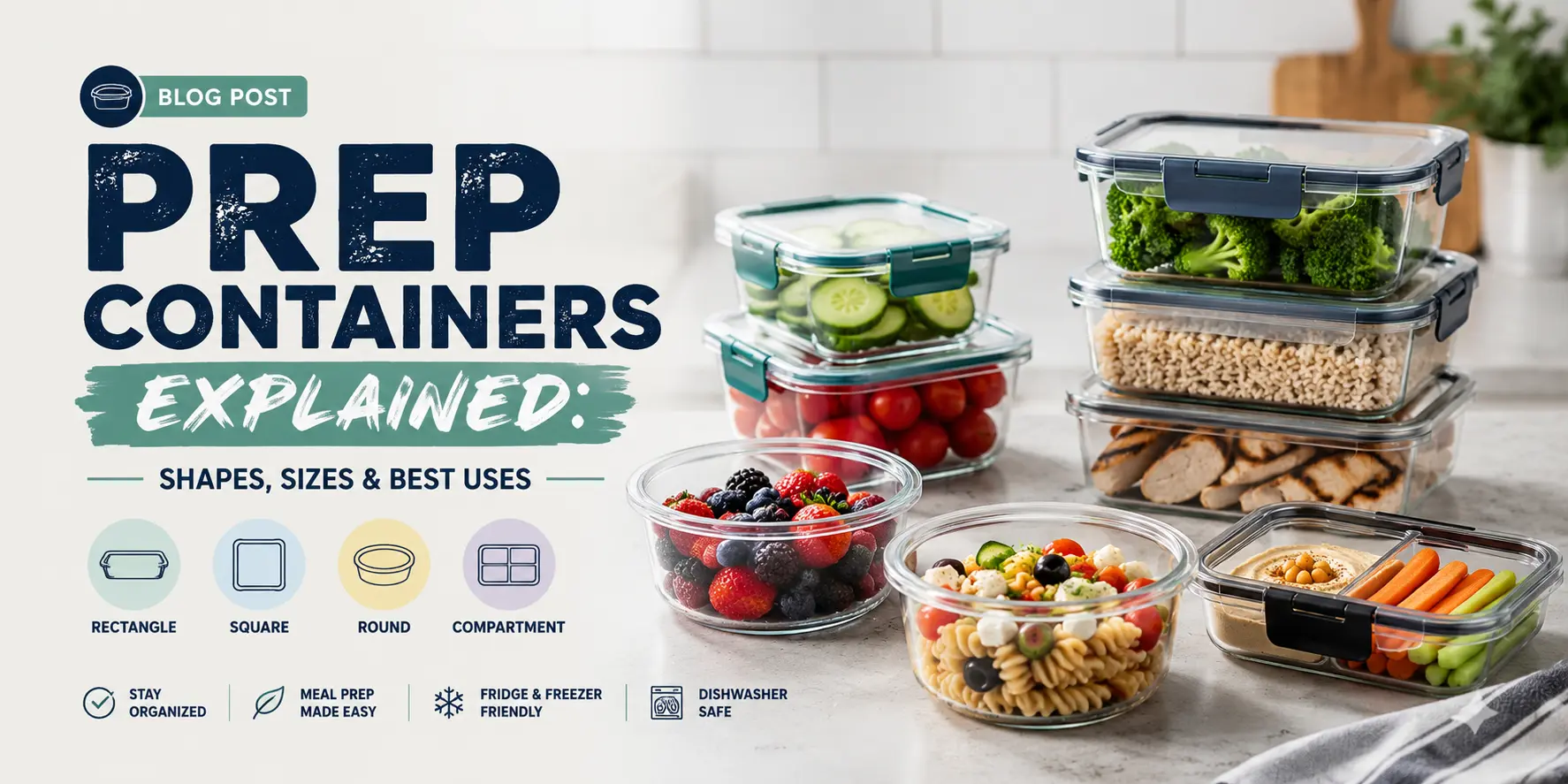
Efficient prep work is the foundation of every successful commercial kitchen. From ingredient organization to food safety and workflow speed, the right food prep containers can make a major difference in day-to-day operations. Yet many kitchens underestimate how important container selection really is.
Choosing the right restaurant prep containers, understanding different shapes and sizes, and using proper storage systems can help reduce food waste, improve organization, and streamline prep stations. Whether you run a restaurant, café, bakery, or catering operation, investing in quality commercial food storage containers is essential for maintaining an efficient kitchen.
In this guide, we’ll break down the most common prep container types, explain their best uses, and help you build a smarter storage system for your operation.
Why Food Prep Containers Matter
In busy kitchens, organization directly impacts productivity. Properly selected food prep storage containers help staff work faster, maintain consistency, and protect ingredients from spoilage.
The right containers help:
- Improve food storage organization
- Support FIFO rotation systems
- Prevent cross-contamination
- Reduce wasted ingredients
- Maximize refrigeration and shelving space
Professional kitchens rely heavily on durable commercial kitchen storage containers because they withstand constant use and simplify kitchen workflow.
The Main Types of Restaurant Prep Containers
Not all prep containers are the same. Different shapes and sizes serve different operational purposes.
The most common categories include:
- Round containers
- Square containers
- Rectangular containers
- Specialty ingredient bins
Understanding when to use each type is key to effective kitchen storage organization.
Round Food Prep Containers
Round containers are extremely common in commercial kitchens.
Best Uses
Round restaurant food storage containers work best for:
- Liquids
- Sauces
- Soups
- Marinades
- Salad dressings
- Prepped proteins
Advantages
- Easier stirring and mixing
- Better for liquid storage
- Smooth interiors reduce buildup
- Easier cleaning
Disadvantages
- Less space-efficient on shelves
- More wasted corner space
- Harder to stack tightly
Despite these drawbacks, round containers remain one of the most popular food prep containers in restaurants.
Square Food Prep Containers
Square containers are designed for maximum storage efficiency.
Best Uses
They are ideal for:
- Chopped vegetables
- Dry ingredients
- Bulk prep
- Cheese
- Prepared toppings
Advantages
- Better use of shelf space
- Easier stacking
- More organized appearance
- Improved storage density
Disadvantages
- Slightly harder to stir contents
- Corners may trap residue
For operators looking to maximize refrigeration capacity, square vs round food containers is usually a question of efficiency versus convenience.
Rectangular Prep Containers
Rectangular prep containers for restaurants are often used in prep rails, sandwich stations, and make lines.
Common Uses
- Pizza toppings
- Sandwich ingredients
- Salad bars
- Prep tables
- Garnish stations
Their long shape allows kitchens to organize ingredients efficiently in tight spaces.
Choosing the Right Prep Container Sizes
Understanding food prep container sizes is critical for workflow efficiency.
Most commercial kitchens use:
- 1 qt containers
- 2 qt containers
- 4 qt containers
- 6 qt containers
- 8 qt containers
Larger operations may also use bulk ingredient bins for flour, rice, sugar, or proteins.
What Size Prep Containers Do Restaurants Use?
The answer depends on:
- Volume of production
- Ingredient type
- Storage space
- Prep frequency
For example:
- Small sauce batches → 1 qt
- Daily chopped vegetables → 4–6 qt
- Bulk proteins → 8 qt+
Using the correct size helps prevent overcrowding and supports better food storage safety restaurant practices.
Prep Containers With Lids: Why They Matter
Using prep containers with lids is essential in any commercial kitchen.
Benefits:
- Prevents contamination
- Extends shelf life
- Reduces spills
- Improves stackability
- Supports FIFO systems
Quality food storage containers with lids are one of the most important investments in modern commercial kitchen storage.
Polycarbonate vs Polypropylene Containers
Many operators ask which material works best.
Polycarbonate Food Containers
These are:
- Extremely durable
- Clear for visibility
- Stain resistant
- Ideal for high-use kitchens
Polypropylene Containers
These are:
- Lightweight
- More affordable
- Slightly flexible
- Great for cold storage
Many restaurants use a combination depending on application and budget.
Stackable Food Containers for Restaurants
One of the most valuable features in modern kitchens is stackability.
Why Stackable Containers Matter
Stackable food containers restaurant operations use help:
- Maximize vertical space
- Reduce clutter
- Improve organization
- Simplify inventory checks
This becomes especially important in smaller kitchens with limited refrigeration space.
How to Organize Prep Containers in Kitchen Storage
An effective prep system isn’t just about containers—it’s about organization.
Best Practices:
- Store similar ingredients together
- Label every container clearly
- Rotate inventory using FIFO
- Use square containers for dense storage
- Keep frequently used items accessible
Understanding how to organize prep containers in kitchen systems reduces wasted movement and improves workflow.
FIFO Food Storage Containers & Rotation Systems
FIFO (First In, First Out) is one of the most important principles in proper food storage practices.
FIFO Helps:
- Reduce spoilage
- Improve freshness
- Simplify inventory rotation
- Support food safety compliance
Using labeled FIFO food storage containers makes this process much easier.
Preventing Food Spoilage With Better Containers
Poor storage is one of the leading causes of food waste.
Improper containers may:
- Leak
- Crack
- Fail to seal properly
- Absorb odors
- Cause dehydration
High-quality restaurant food storage containers help maintain freshness and prevent unnecessary waste.
Commercial Kitchen Storage & Space Optimization
Storage efficiency matters more than ever in modern kitchens.
Using proper commercial kitchen storage containers allows operators to:
- Increase usable refrigeration space
- Improve shelving organization
- Reduce clutter
- Speed up prep and service
Combining shelving systems with standardized containers creates a cleaner and more efficient operation.
Common Mistakes Restaurants Make With Prep Containers
Many kitchens unintentionally create inefficiencies through poor container management.
Common Problems:
- Using mismatched container sizes
- Missing lids
- Overfilling containers
- Poor labeling
- Using damaged containers
Standardizing your restaurant prep containers improves consistency and reduces confusion.
Building a Smart Prep Container System
A strong prep storage system should include:
- Multiple container sizes
- Tight-fitting lids
- Labeling systems
- FIFO rotation
- Dedicated shelving areas
This creates a streamlined prep environment where ingredients are easy to find, easy to rotate, and easy to protect.
Choosing the Best Prep Containers for Restaurants
When selecting best prep containers for restaurants, consider:
- Material durability
- Visibility
- Lid quality
- Stackability
- Temperature resistance
- Ease of cleaning
Professional-grade containers may cost more upfront, but they typically last longer and improve efficiency significantly.
Final Thoughts
The right food prep containers are much more than simple storage tools—they are essential components of kitchen organization, food safety, and operational efficiency.
From choosing between square vs round food containers to understanding food prep container sizes and implementing FIFO systems, every decision affects workflow and food quality.
By investing in durable commercial food storage containers, organizing prep stations effectively, and following proper storage practices, restaurants can improve efficiency, reduce waste, and create a more productive kitchen environment.
In the end, smarter containers lead to smarter kitchens.